Bleed is artwork extended beyond the trim edge so printing and cutting do not leave an unintended white line.
GLOSSARY · AMAZON KDP
Bleed
Bleed is artwork extended beyond the trim edge so printing and cutting do not leave an unintended white line. This page explains the decision, production steps, risks, and final review required for a KDP-ready edition.
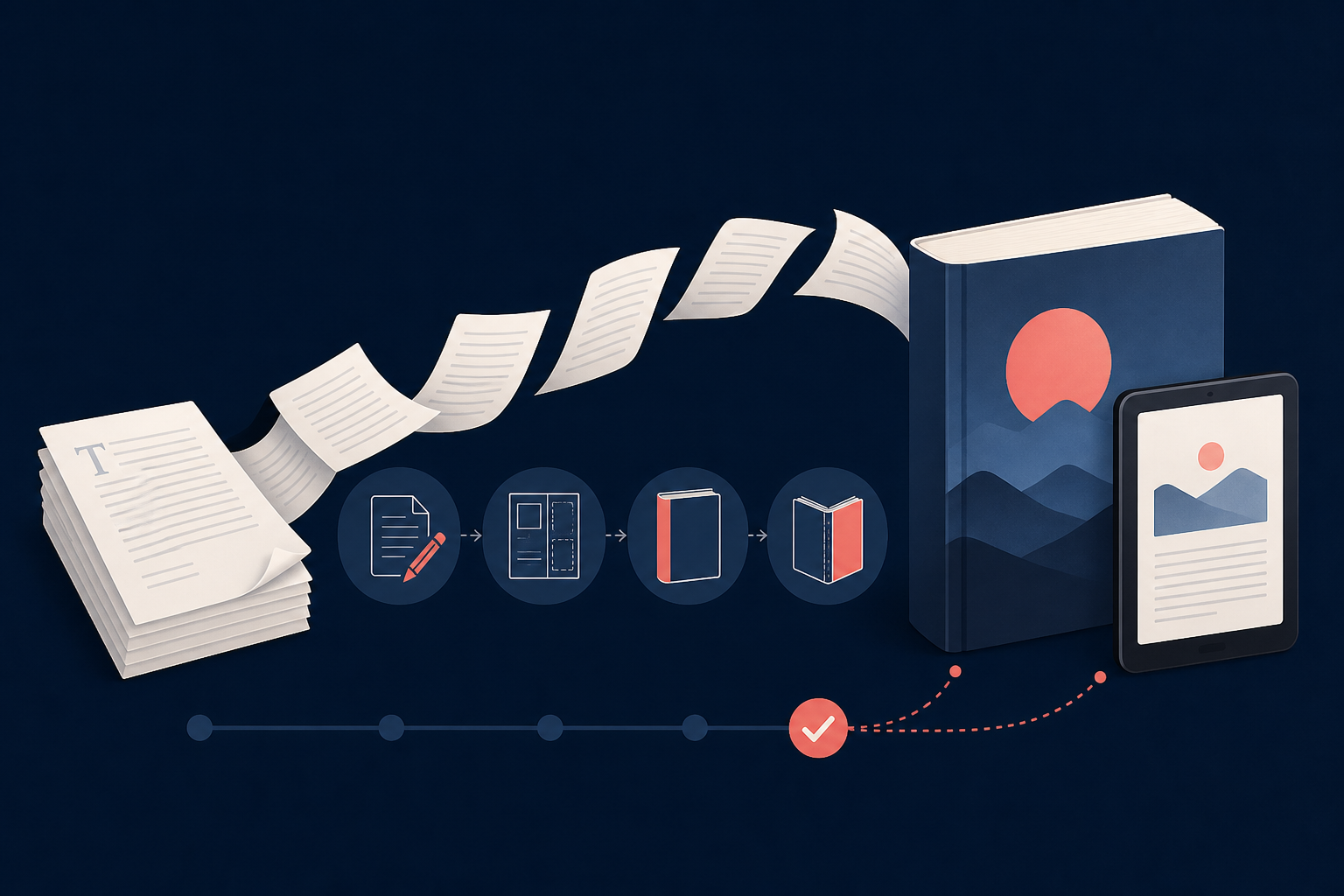
Product proof
See it in BookWizard
What Bleed means
Bleed is artwork extended beyond the trim edge so printing and cutting do not leave an unintended white line. It should be understood in the context of the exact print or ebook edition being prepared.
The intended reader or decision context is specific: KDP interiors and covers use bleed when images or backgrounds intentionally run to an edge. That scope keeps the project aligned with the book readers will actually receive.
Where it matters in KDP
Before production, KDP interiors and covers use bleed when images or backgrounds intentionally run to an edge. Record these choices in the project brief so drafting, design, and metadata use the same assumptions.
This is especially important for KDP because a late edition change can affect pagination, cover dimensions, identifiers, listing fields, or distribution choices.
A common misunderstanding
The operational approach is to choose bleed mode early, extend only the intended art, and protect text with safe margins. Work from one approved source instead of editing disconnected exports.
Use explicit approval points for structure, manuscript, visual assets, edition settings, and metadata. That keeps speed from turning into version confusion.
How to apply it correctly
A key risk is this: placing text in the bleed area or failing to extend edge artwork creates cropping and white slivers. Correct the source decision rather than patching only the final file.
For the final check, editor,cover. KDP Previewer and the current Amazon help pages remain the authority for the submission surface.
How BookWizard handles the term
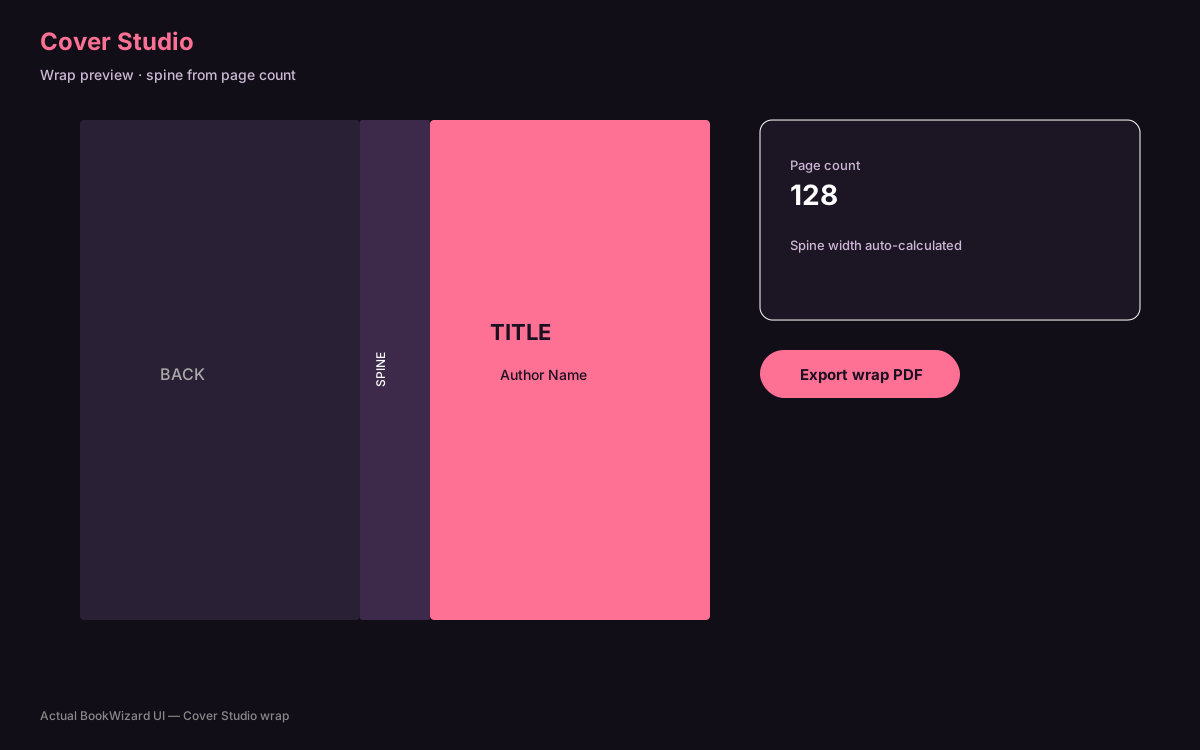
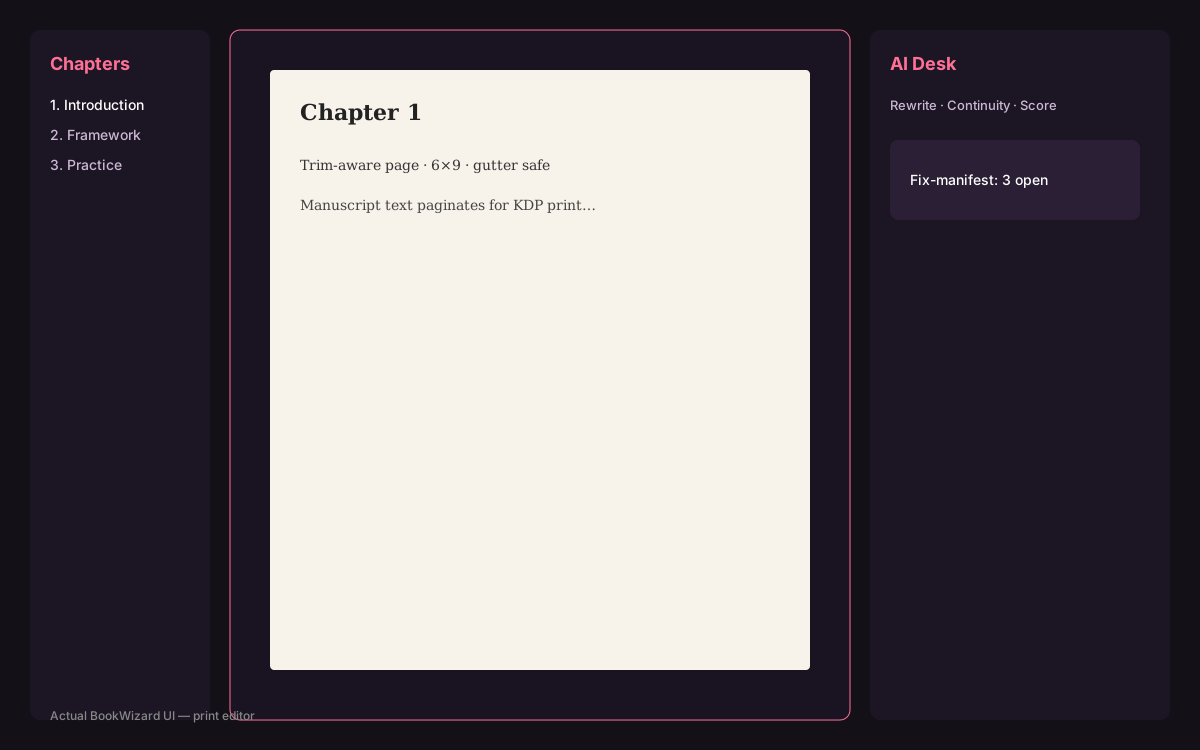
BookWizard connects Bleed to the rest of KDP production: Autobook supports structured drafting, the print editor handles trim-aware pages, Cover Studio builds the wrap, and Export Studio packages PDF, EPUB, manifest.json, and checklist.md. Publish Studio prepares listing fields, while the Chrome extension uses preview-before-apply so you remain in control. Studio is $20/mo with 1M AI tokens, and a typical ~50-page pack can take about 45 minutes. BookWizard does not auto-publish and does not promise royalties.
FAQ
Common questions
Last reviewed: 2026-07-29